The most difficult part of the build by far was getting the battery and motor cover watertight.
I was using two really nice marine hatches, but they were leaking so much, and it was impossible to stop this )-:
Now I’m using a cut down pelican case as motor cover (nice to keep the towels in too), and a PVC drainage lid as battery cover. The pelican case will be changed to the PVC drainage lid system later this summer.
My dad and I already started on building a new version of the board with integrated hatches.
This new board will be made from wood. The weight of the new wooden board itself will be around 7 KG, and have a partly removable deck for access to the two jets and battery’s.
Yes I know. I did some 12S test, and boy… I was scared!
My dad and I are building a 2nd board at this moment. It’s almost done, and it will use a DIY 12S12P setup
Soon more!!!
Nicee
When you build your own electric skateboard, you can choose your battery’s total voltage. The usual choice is 6S 22.2 volts, 8S 29.2 volts, 10S 37 volts and the most is a 12S 42 volts.
You can add more amps by using a better, more powerful battery. The most common rating for a standard motor has a maximum output per motor of 80 amps. You may not need this much on an electric board. This is a lot more than what riders need and usually, this will only leave you off your board and on the floor.
A set up with bigger motors and stronger batteries will give you more power so you can get higher wattage out of your motors. And although this is a very powerful motor, you might only injure yourself.
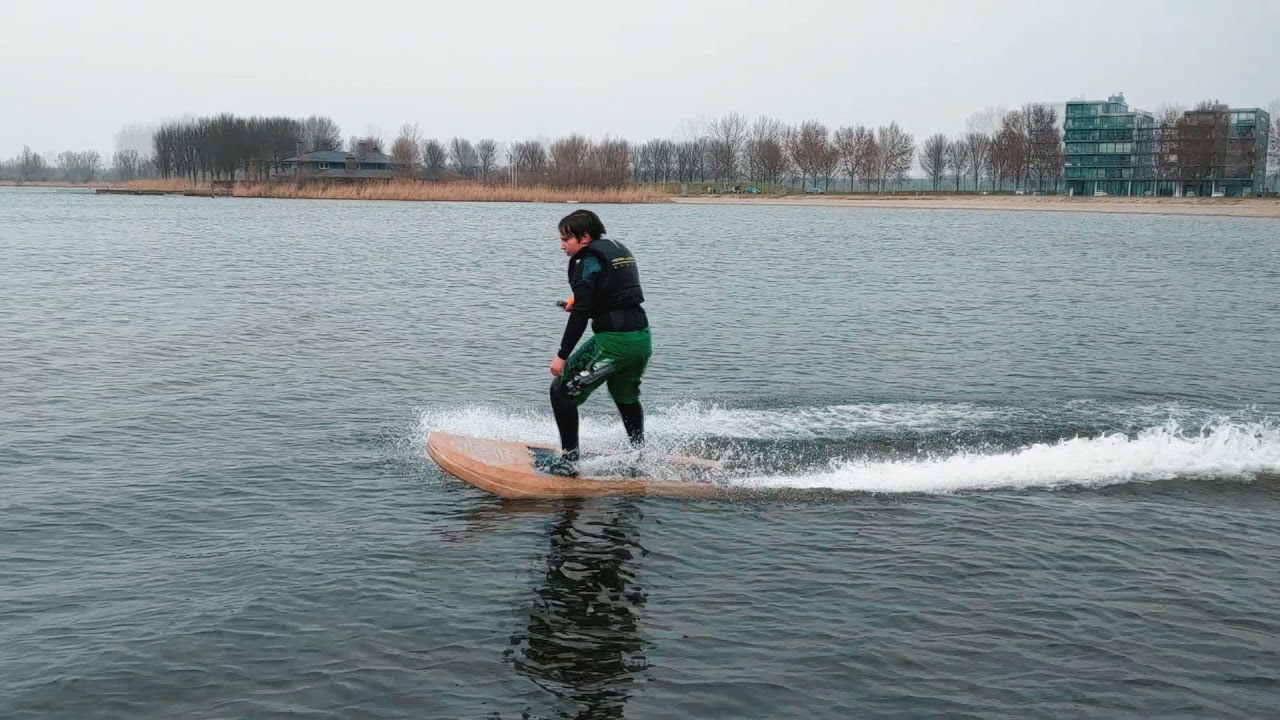
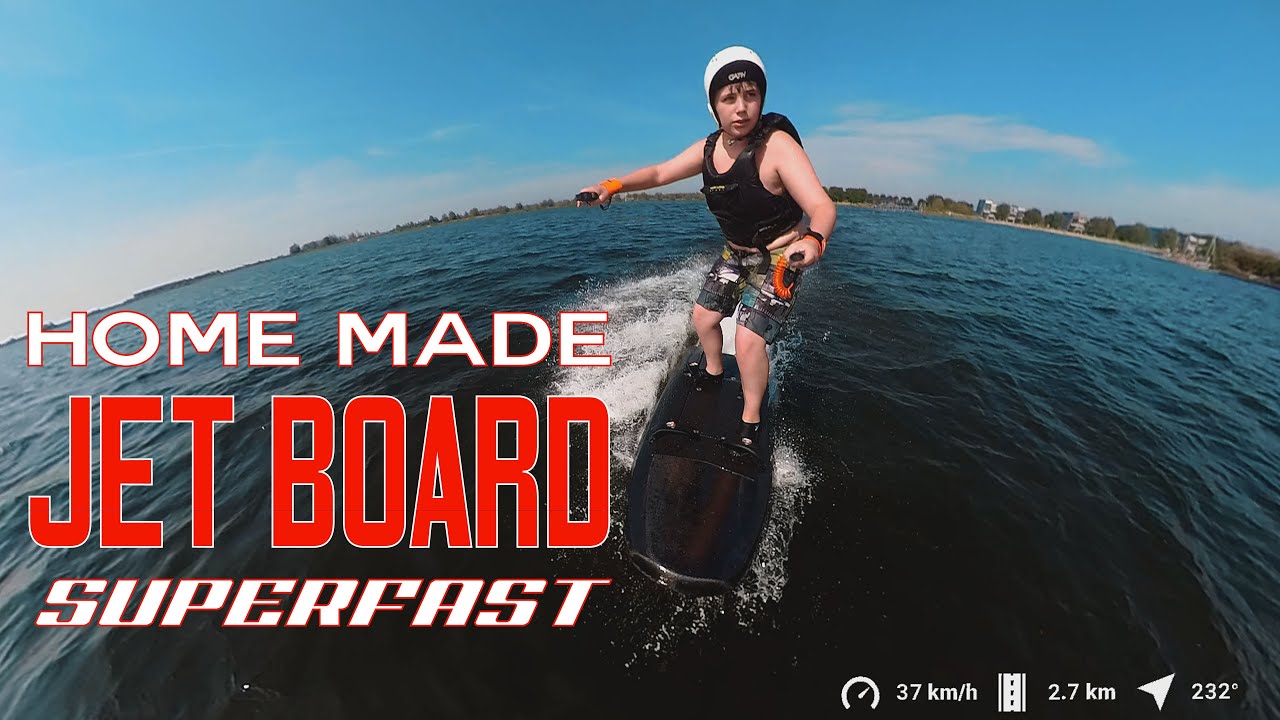
Here is a short video of me running the new board with 12S12P.
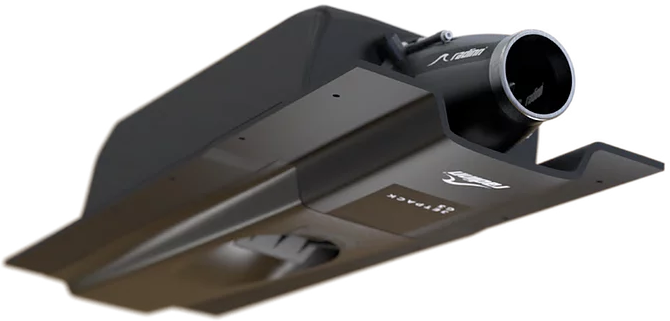
The impellers used are a test version. Unfortunately the cavitate for me when running at WOT.
The original impellers do not have this problem, and I will get some new video with the next run soon.
Finally we managed to get some more testing done with our DIY jet board.
The ESC’s are set to 70% power output.
We still have some cavitation problems, but only in rough conditions.
Another small issue is with the BMS FET’s heating up too much, however this should be an easy fix.
Hi how do you think you will get past the cavitation issue. The board I plan is very similar to yours but It has a very flat surface. Is there something that you can do with fins to help?
I am very much a noob to jets so this might be wrong of me but having a long intake would surely be a dissandvantage because of weight and load to pull it from a greater distance?
I do like the scoop idea though
What components do you need to build a DIY electric surfboard?
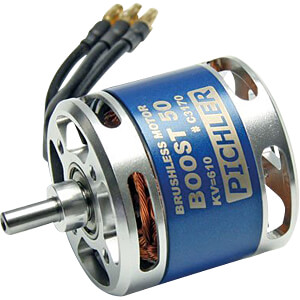
Based on this build and community experience, you need: a waterproof jet or
propeller drive system, brushless motor (e.g. 56102 600KV), ESC (e.g. Flier ESC
240 16S), waterproof remote control (e.g. Maytech V2), LiPo batteries (6S, minimum
4500 mAh), and a surfboard base (8’0 or larger).
How fast can a DIY electric surfboard go?
This build reaches approximately 30 km/h at 22.4V (6S). Speed depends on motor KV
rating, battery voltage, and board weight.
What is the hardest part of building a DIY electric surfboard?
Waterproofing the motor and battery cover is the biggest challenge. A Pelican case
works well as a motor cover with a PVC drainage lid for the battery compartment.
How much does a DIY electric surfboard cost?
Component costs vary, but expect €500–€1,500 for a functional build —
significantly cheaper than commercial electric surfboards (€5,000–€15,000+).